Our Products
Fresh Water Lobster (Marron)
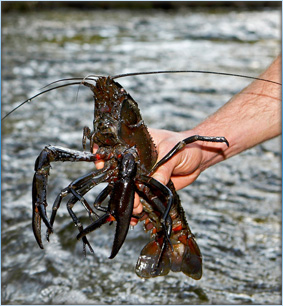
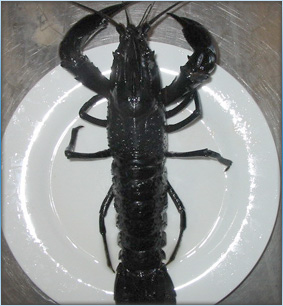
Benefits of Live Marron (Cherax tenuimanus)
Marron have the highest meat/shell ratio of all the freshwater crayfish (up to 42%). Being a farmed crustacean, supplies are available year round and are not subject to price fluctuations as with many wild catch products.
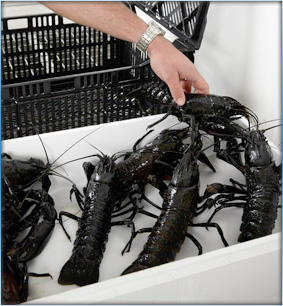
Their best selling feature is their ability to survive out of water for up to seven days; this makes them an ideal candidate for live shipment. On arrival the product is best kept at 4-8 degrees Celsius in a cool room situation, or it can be held in live tanks in freshwater providing even longer life.
Taste and Texture does not diminish with size as does most lobster species. In reality the taste and texture of marron is far superior to any of the common species of crawfish available and is highly regarded by chefs around the world as having a truly unique delicate flavor. Marron is less "stringy" and has a recognized sweeter flavor.
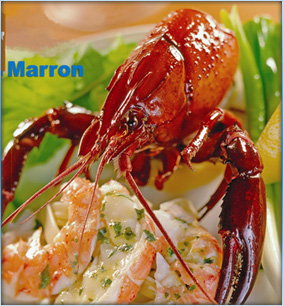
Presentation is exquisite and preparation is easy. The shell cooks red with shelled meat vibrant red on pristine white flesh. Meat has high visual impact.
The industry itself is still quite small with the annual world production being less than 100 metric tons.
Supply is available 12 months of the year (farmed, not wild catch.)
Marrons are the 3rd largest freshwater crayfish in the world, but the largest commercially available i.e. 1st and 2nd largest are not commercially available. This makes marron the largest commercially available freshwater crayfish in the world!
Marron is very high in healthy Omega-3 fatty acids and low in calories.
Aquatic Resource Management recognizes the spawning season (Aug-Dec) as the time most likely to affect meat quality as the female puts her energy into the developing eggs and juveniles. To overcome this we purchase large volumes of marron prior to the spawning season and hold them monosexed (so they don't mate) and sized in ponds to ensure continuity of consistent quality product.
Marrons are a non-burrowing species and live in the water column. In most cases this means that they don't suffer from the muddy taste sometimes associated with species such as Yabbies that do burrow. In extreme situations such as drought they have been known to burrow for survival, however this is not the norm.
Accreditation recognises the successful, long-term, sustainable management of seafood supplies in Australia.